Office (404) 964-8355
Hours M-F 8AM-8PM ET
THE SHIP IN A BOTTLE
58 Columbine
Glade - Dawsonville, GA 30534
Authentic US Navy Bells and Commercial Ship Bells
The bells pictured below almost certainly rang 8 bells at some point or another. You can be sure that the bell you purchase from THE Ship in a Bottle is of the highest quality and accurately represented in photographs and descriptions. Each of my authentic US Navy bells come with a premium custom made bell rope.
US Navy Bells
New Bells just in...!
We will be receiving additional bells that have yet to be photographed and added to our site.
We Buy and Sell Authentic US Navy bells
Looking to sell your bell on Consignment?
Call (404) 964-8355 to discuss the consignment of your bell.
In short, here is how it works... We agree on a sale price... We photograph and describe your bell... we then list your bell on our website. Of course there are some details to cover so call for additional information.
We are always looking for new and authentic bells to add to our inventory.
US Navy Bells Available for Sale
WW-I Era US Navy Fore Deck Bell
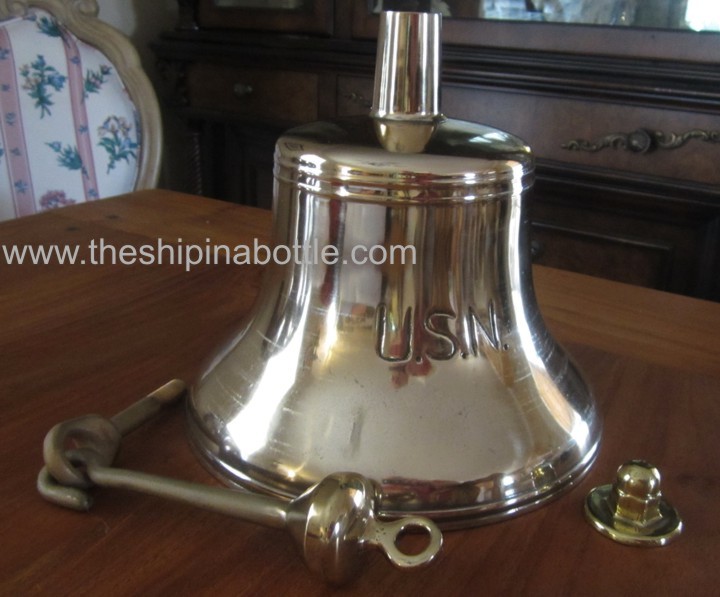 |
Authentic WW-I Era Fore Deck Bell
with original Clapper and Hardware. FOR SALE BELL-0021 |
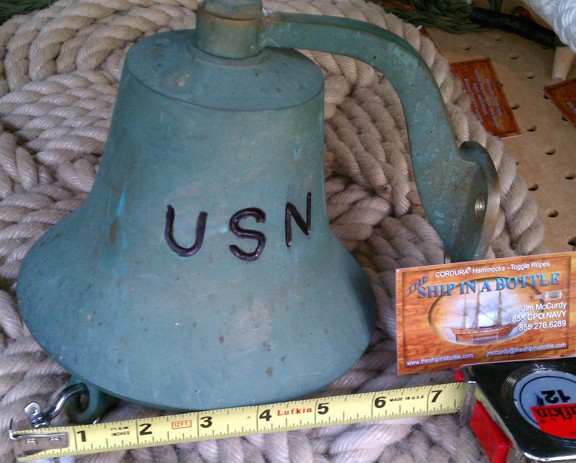 |
SOLD | Quarterdeck Bell 7" Diameter. This beautifully patinated bell was reported to have come from a WW-II navy vessel although this cannot be verified. At any rate, it is a very nice bell that will certainly be a grand addition to any display. Comes complete with custom bell rope and clapper/mounting hardware shown. Call (404) 964-8355 for your quote. |
Recently Sold US Navy Bells:
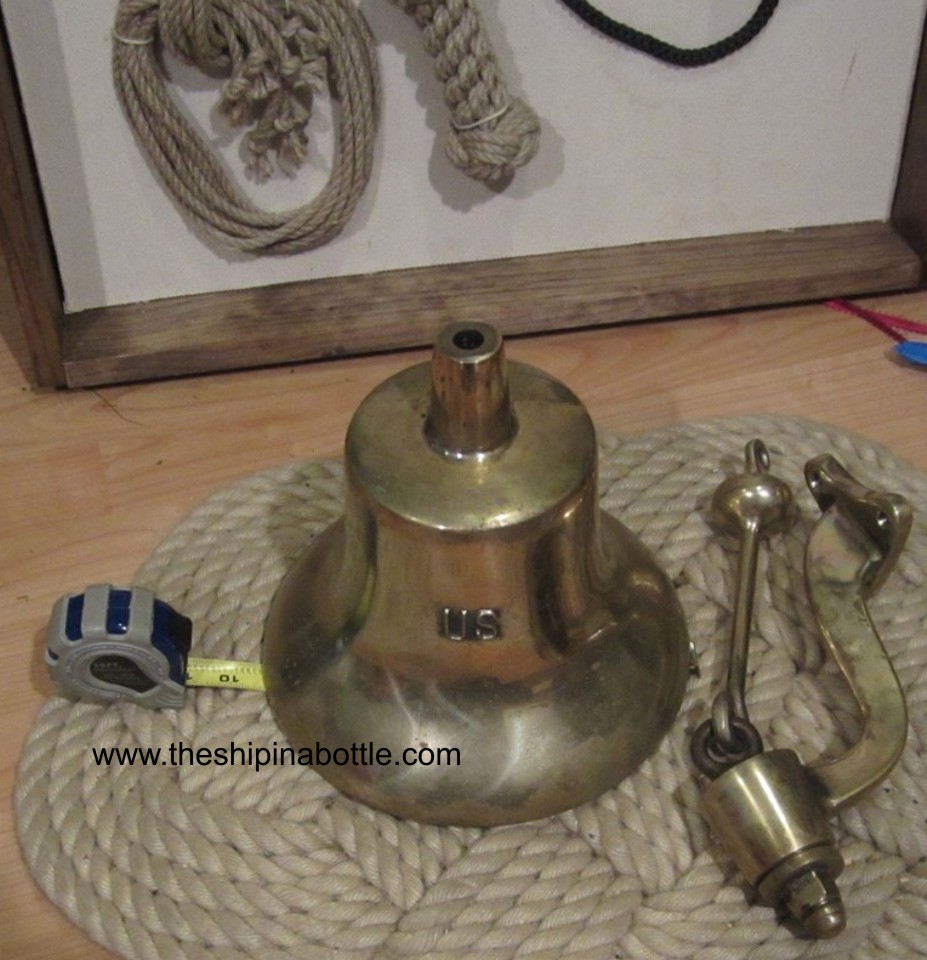 |
SOLD | 9-1/4 Inch Quarterdeck Bell in very good condition. Bell with hardware weighs 19 pounds. This is a well preserved bell that will clean up nicely. Heavy brass mounting arm with finial and clapper. Call (404) 964-8355 for your quote |
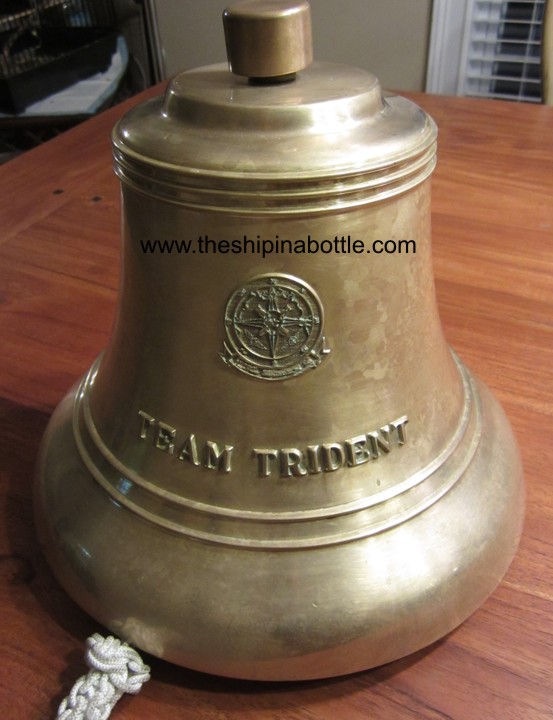 |
SOLD | US Navy Bell "Team Trident" VP-26 This remarkably well maintained US Navy bell is in exceptionally good condition and clearly shows the "Team Trident" motto and Logo from VP-26. It measures 12 inches across the base and weighs 36 pounds. A large and heavy bell that will certainly be a centerpiece in its new home. It was cast for the Navy by the Bellingham Bell Company and is serialized #1909. Call (404) 964-8355 for your quote. |
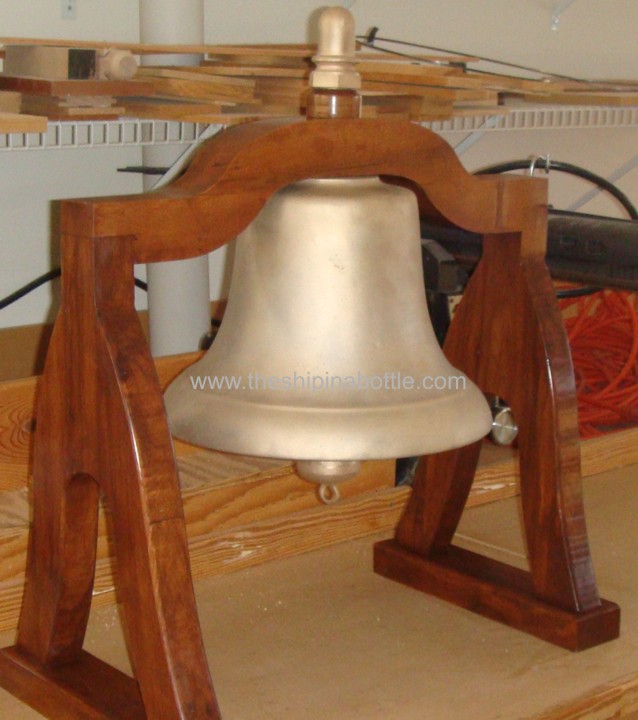 |
SOLD | This large navy bell is in very good condition. It is reported to have come from a base in the Asian Pacific. The bell alone, not including the clapper and finial weighs 50 pounds and is 14 inches wide. It will be sold with or without the KOA wood base. Call (404) 964-8355 for your quote. |
 |
SOLD |
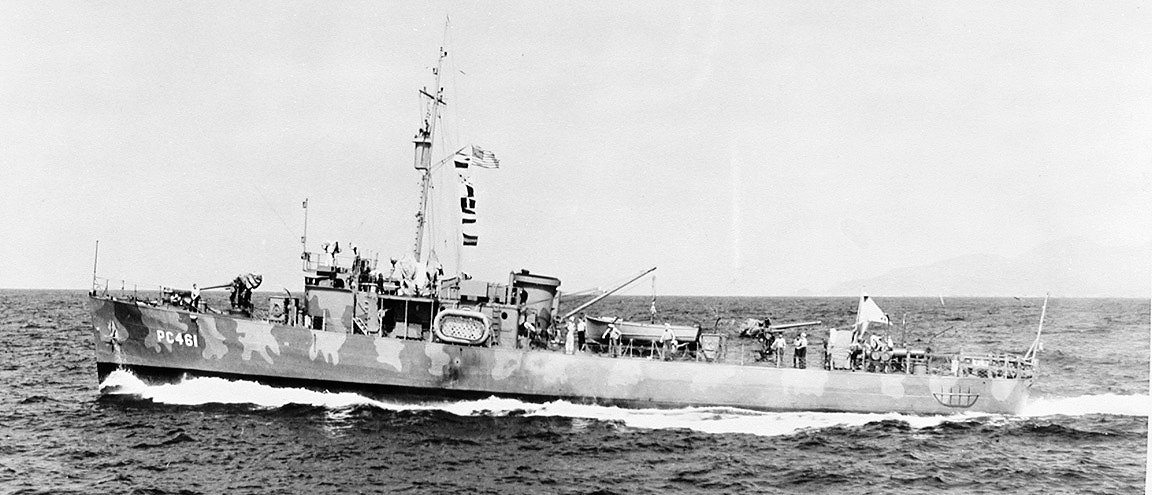 |
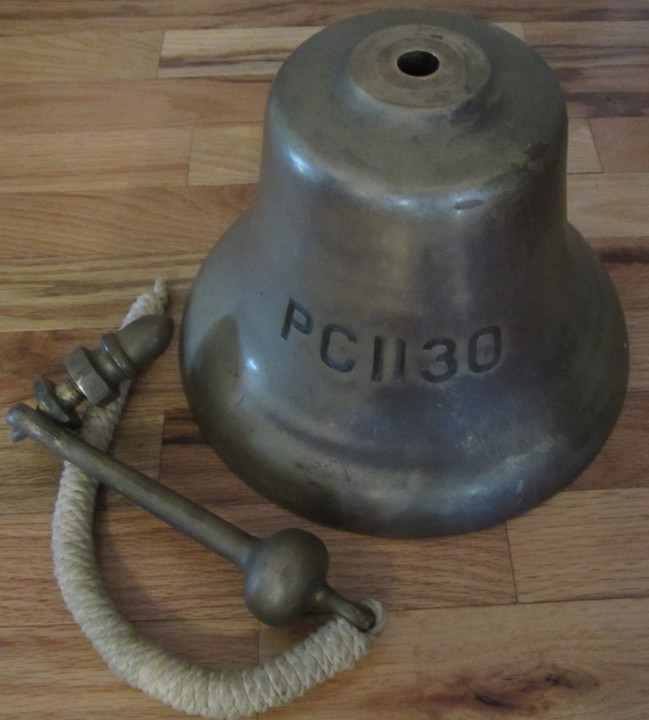
WW-II Ship Bell This is a very well preserved bell with distinct lettering PC-1130. The bell measures 9-7/8” at the opening and with clapper weighs about 20 pounds. It has the original clapper and nut. Named bells of this type are becoming increasingly rare. USS PC-1130 was a WW-II Submarine Chaser of the PC-461 Class. Launched 10 DEC 1942 and commissioned 19 JUN 1943. Afterwards, she was transferred to France (Intrepide) and later to South Vietnam (Van Kiep). Please call (404) 964-8355 for a quote. |
 |
WW-I Era Fore Deck Bell. New photos will be added when work is complete. SOLD BELL-0009 |
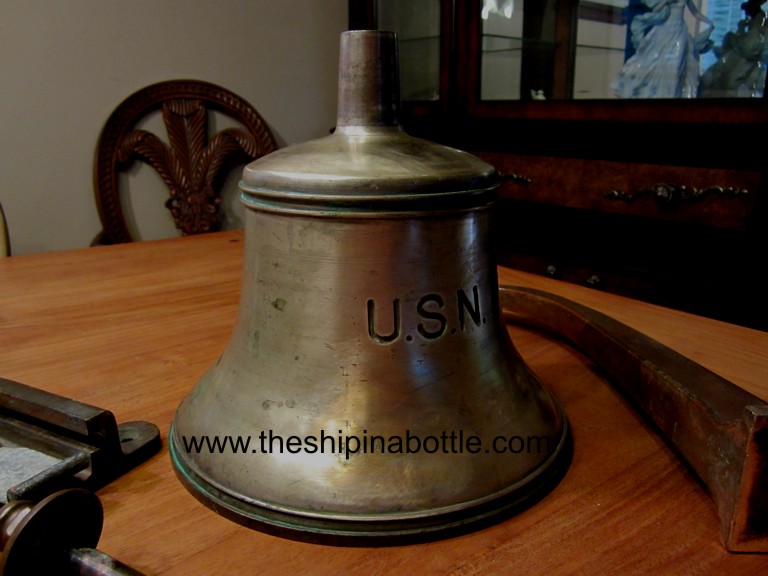 |
Although the history of this beautiful bell may never be known, it is certain to have tolled in the defense of our country. Ring patterns and lettering on this very rare bell indicate casting prior to late 1920s with estimates are circa 1910. This authentic US navy bell will polish up beautifully and is in very good condition with only minor scratches and some pitting as may be typical for the age of the bell. Rings around the top and bottom of the bases of the bell are very prominent. This veteran is 9-7/8 inches across by 10-1/2 inches tall and weigh approximately 22 pounds.
WW-I Era US Navy Fore Deck Bell
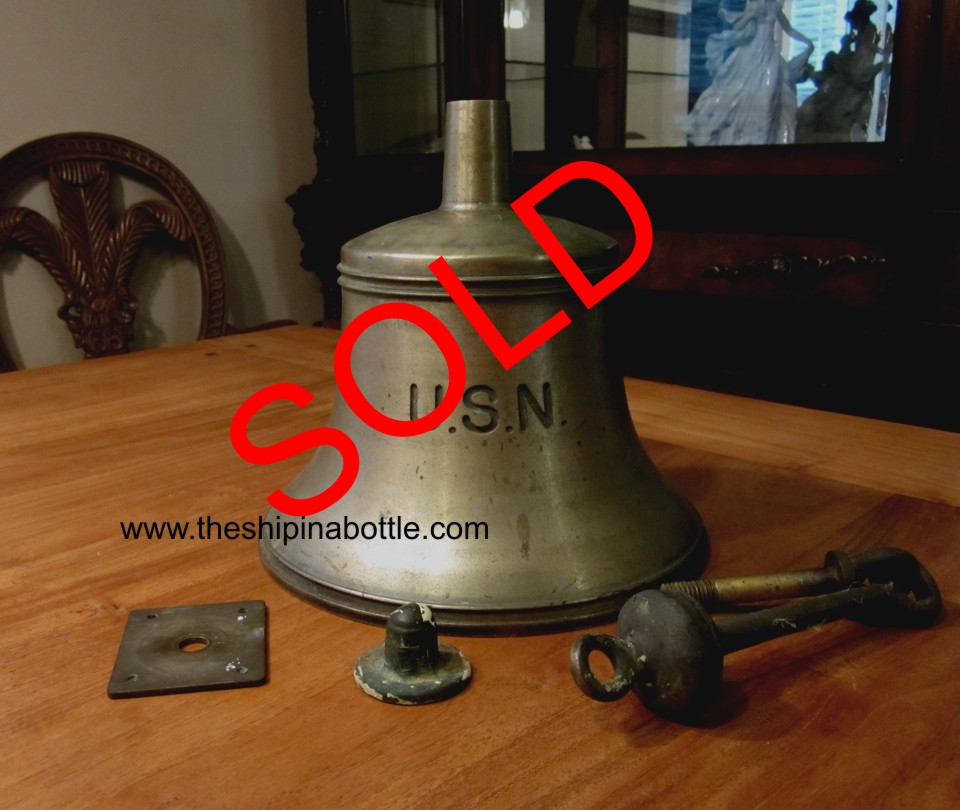 |
Authentic WW-I Era Fore Deck Bell
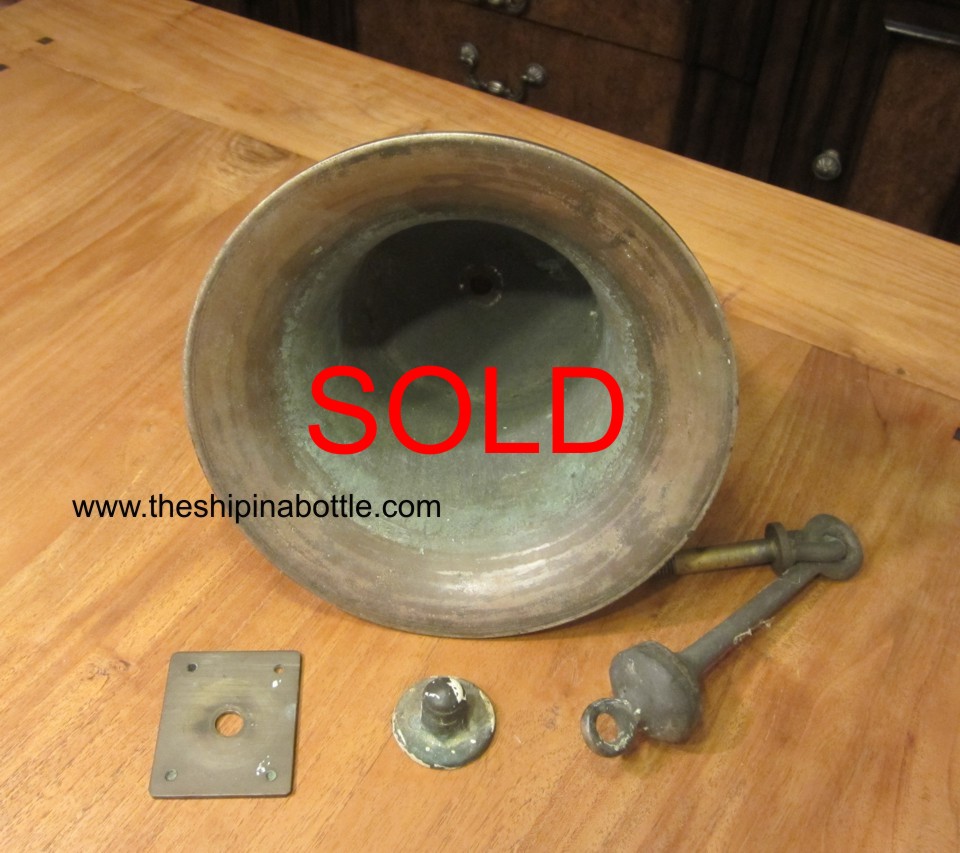
with original Clapper and Hardware. SOLD BELL-0012 |
 |
WWII Cast Iron Bell - Harvard Lock Company
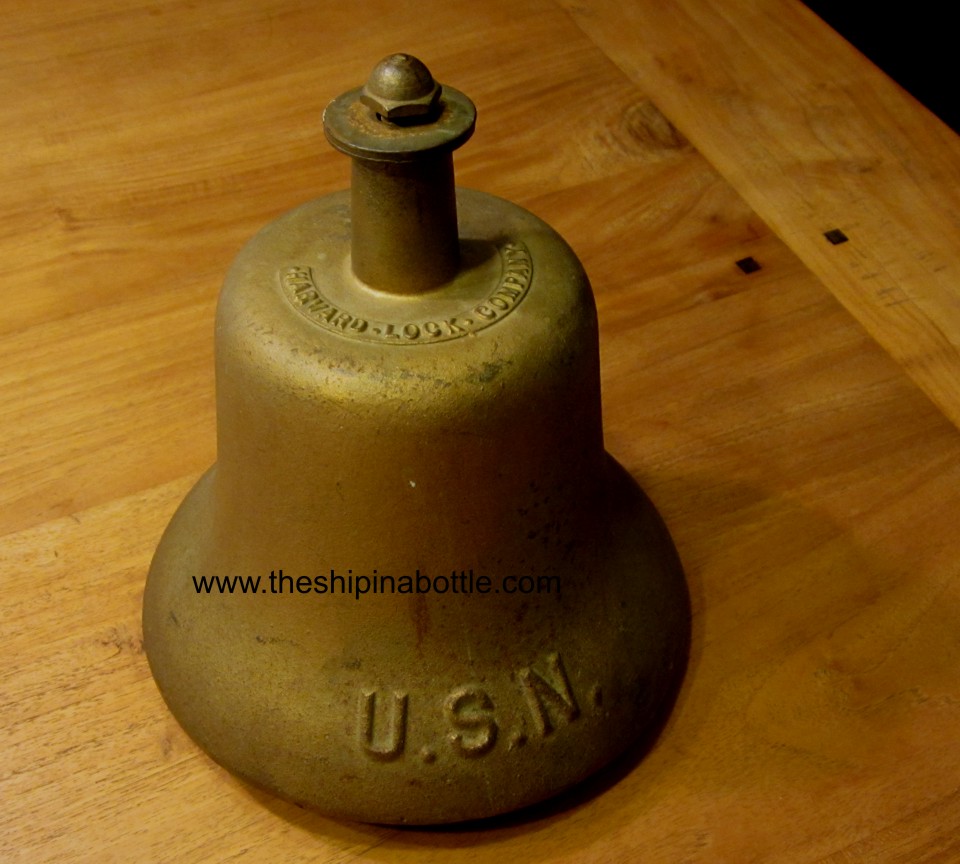 |
WW-II Era Cast Iron Bell Harvard Lock Company BELL-0010 SOLD Comes complete with original clapper and one of our custom bell ropes. |
 |
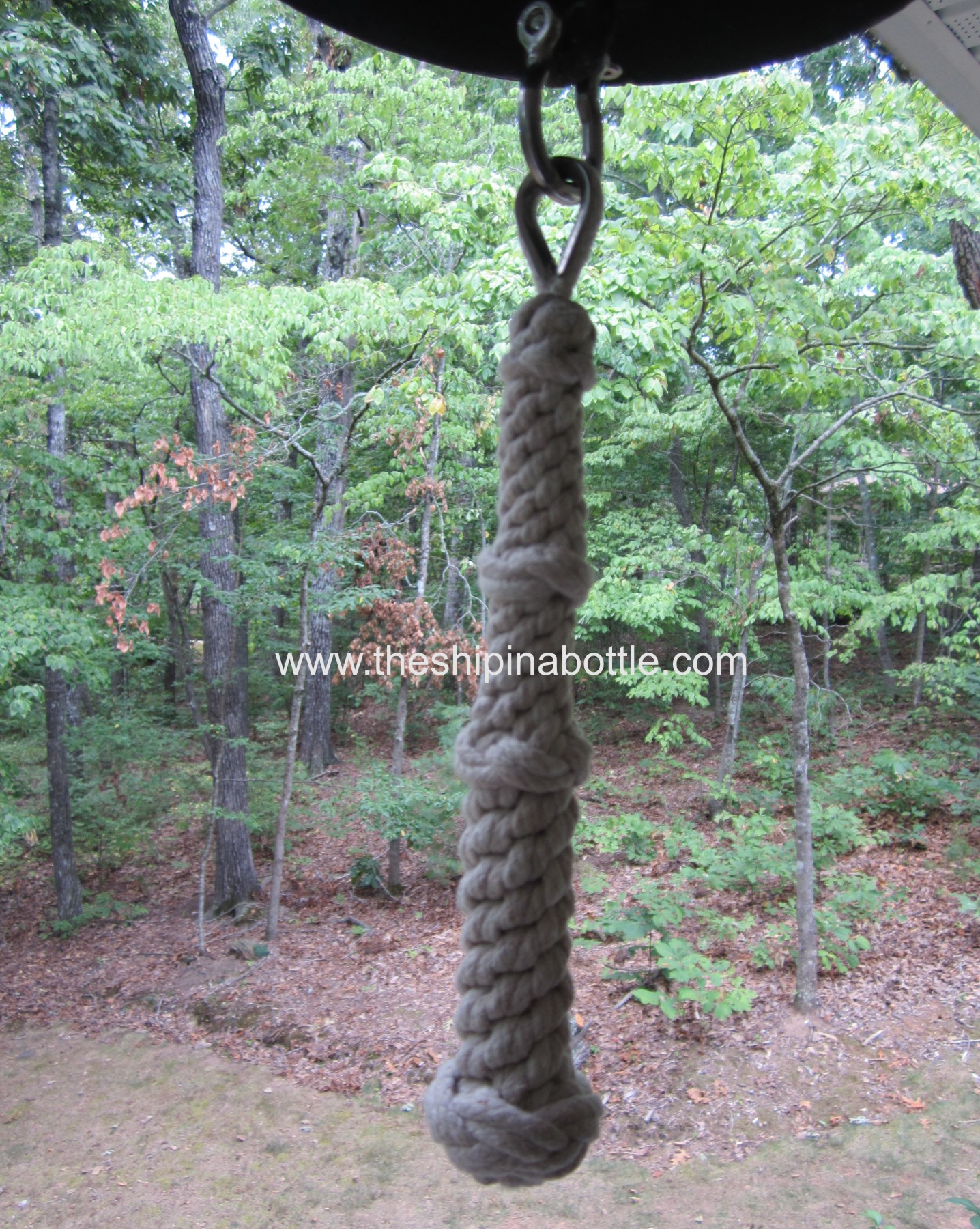
This classic bell is in very good condition and has been very well preserved. Cast in iron with raised lettering U.S.N. and Harvard Lock Company. Bells during this period of WW-II were cast in iron as a result of an emergency order from Washington limiting the use of bronze and brass to actual combat essentials. It weighs approximately 18 pounds and is 10 inches tall by 9-1/2 inches across. See the video below for this beautiful bell and listen as it rings 8 bells!
Huge Brass Bell with Mounting Hardware.
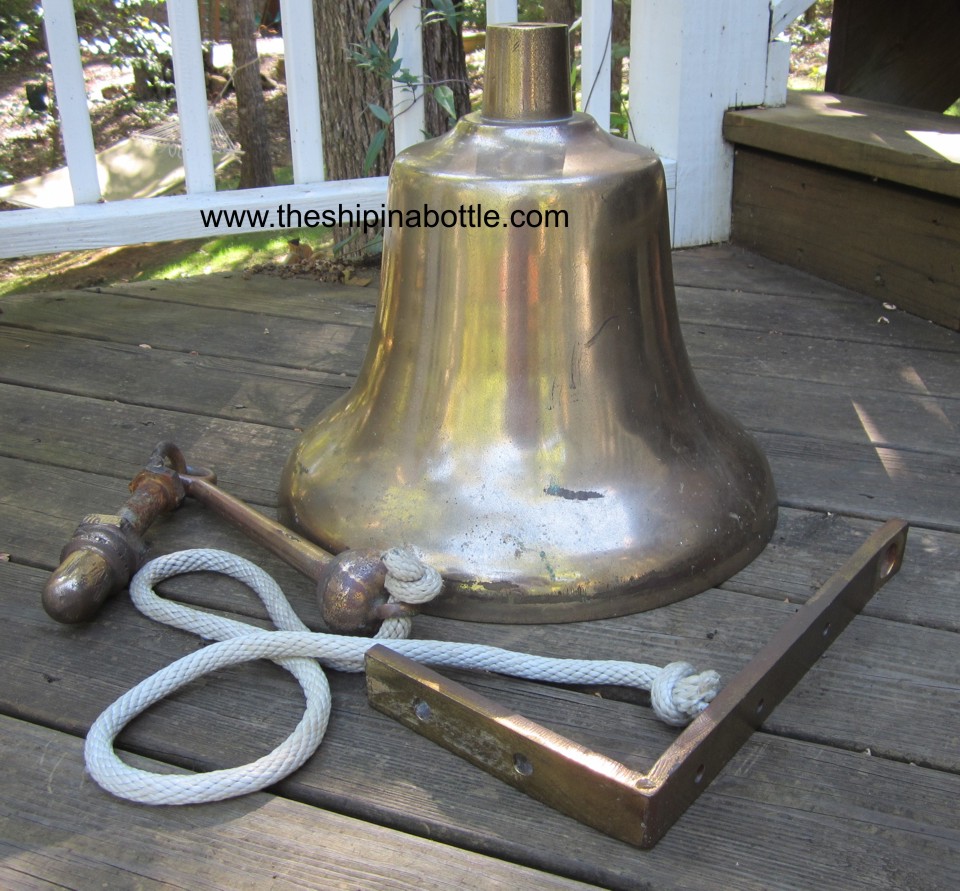 |
Very Large Brass Bell 16 Inches in Diameter. Complete with Clapper, Mounting Hardware, and Rope. Weighs approximately 90 LBS. SOLD BELL-0011 |
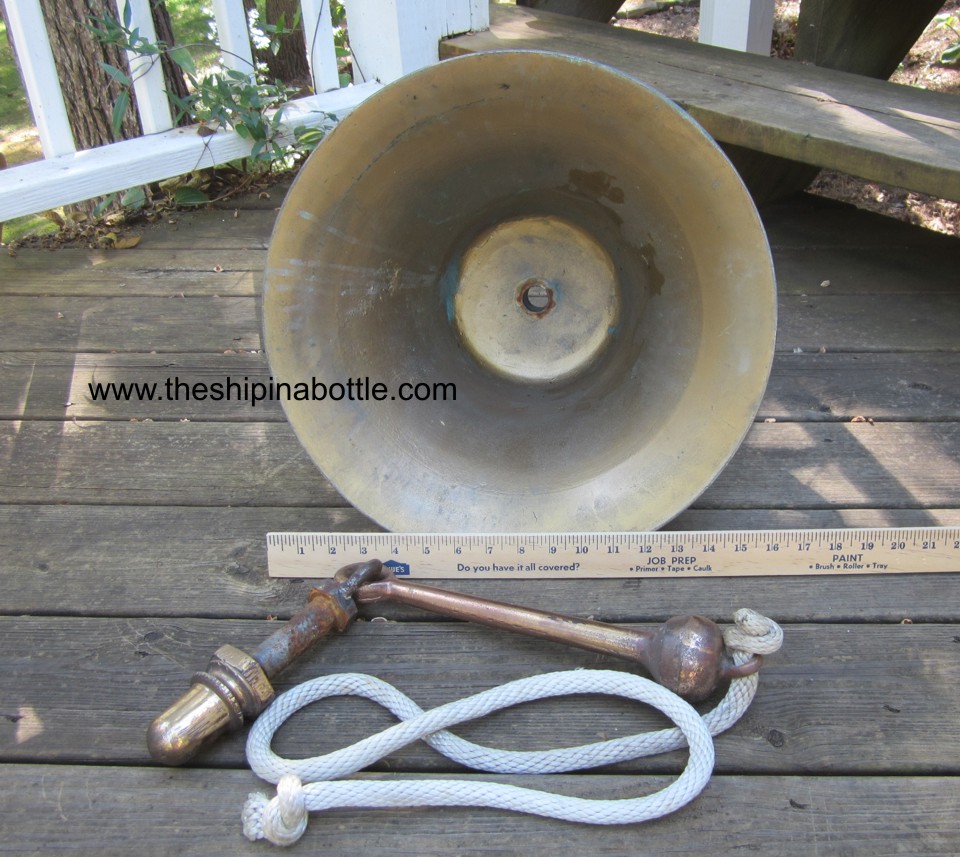 |
The Bell weighs a whopping 90 pounds (approximate) and is 14.25
inches tall by 16 inches wide.
|
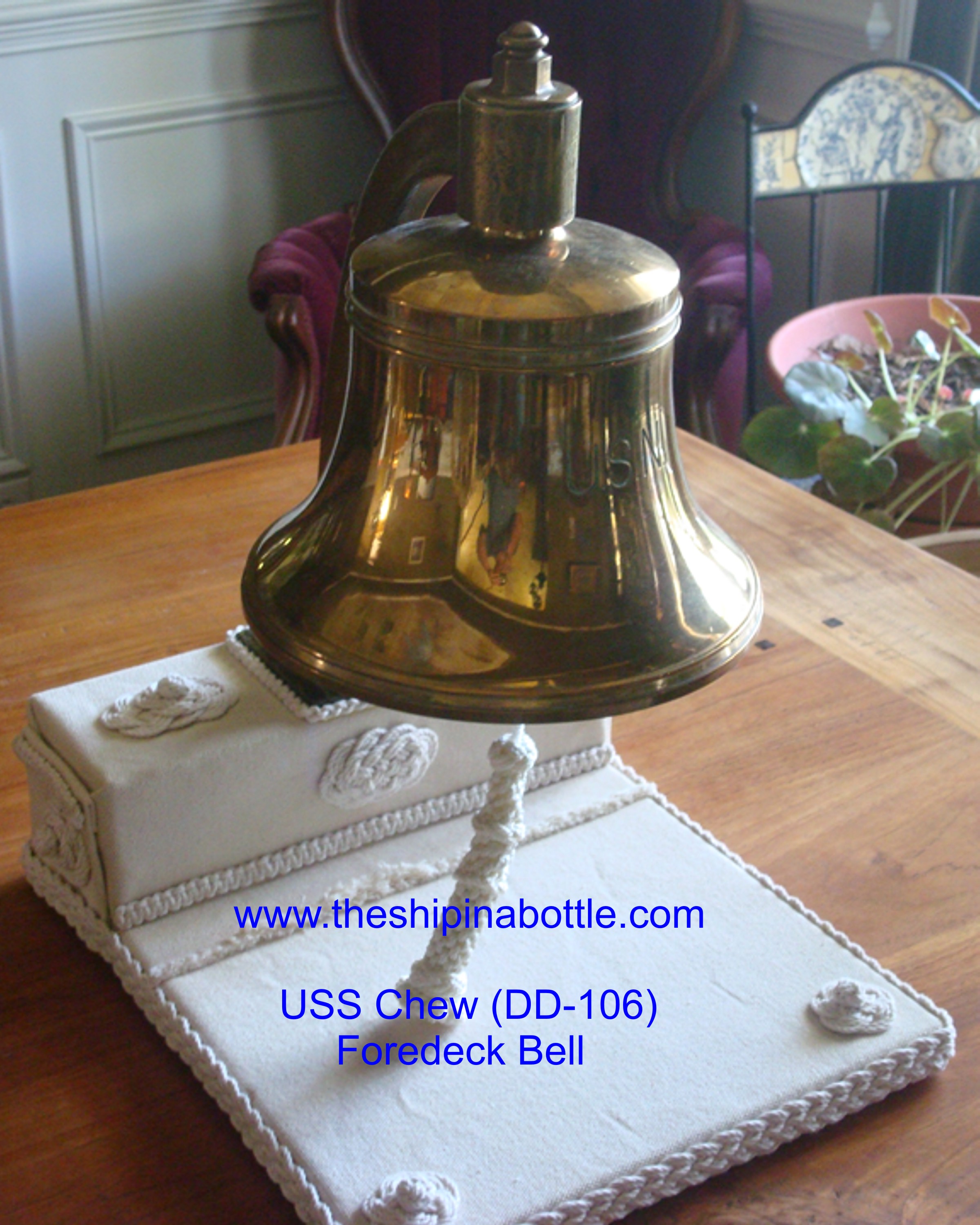
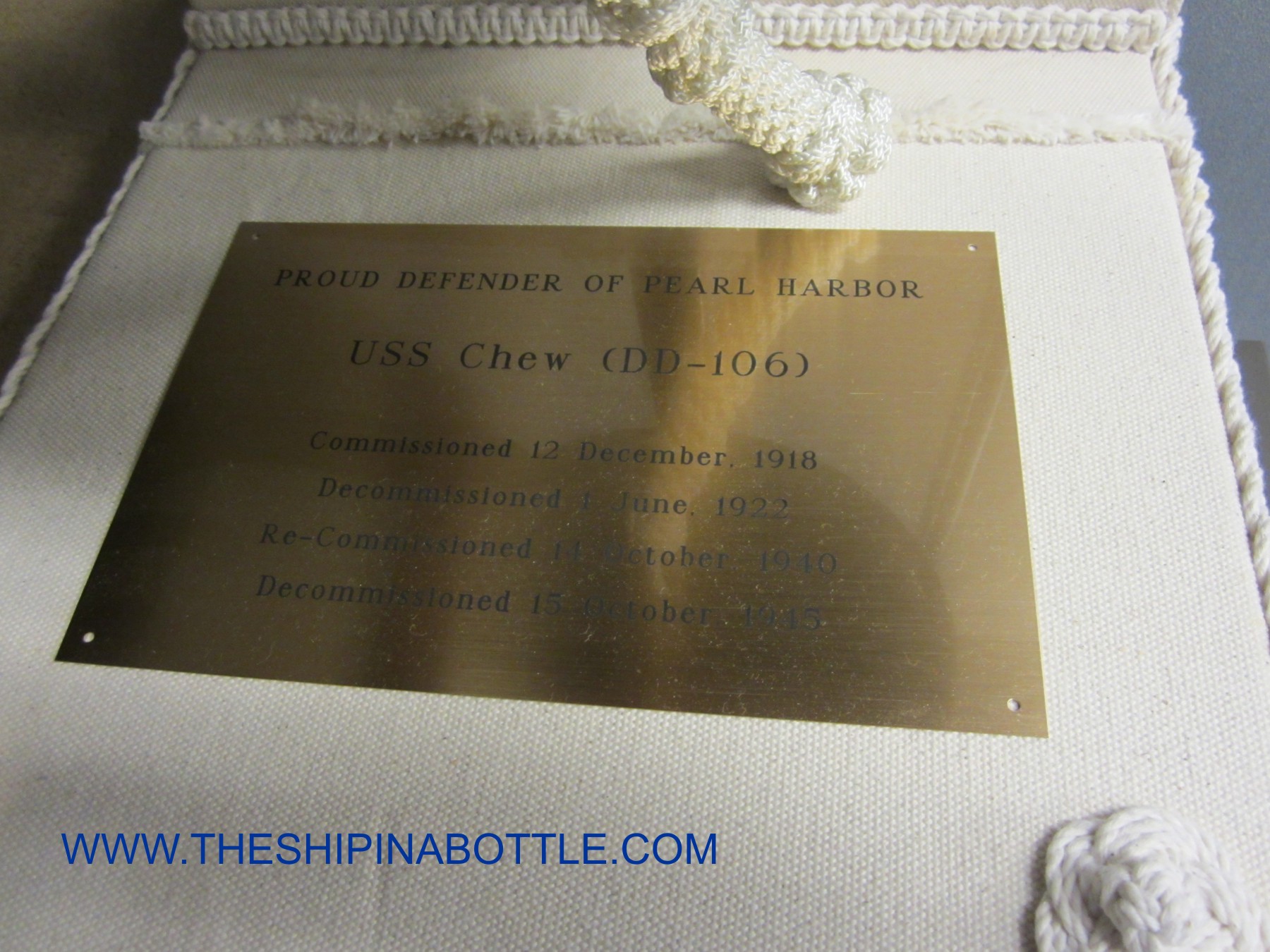
Fore Deck Bell WWI and WWII Pearl Harbor Defender USS Chew (DD-106) SOLD |
 |
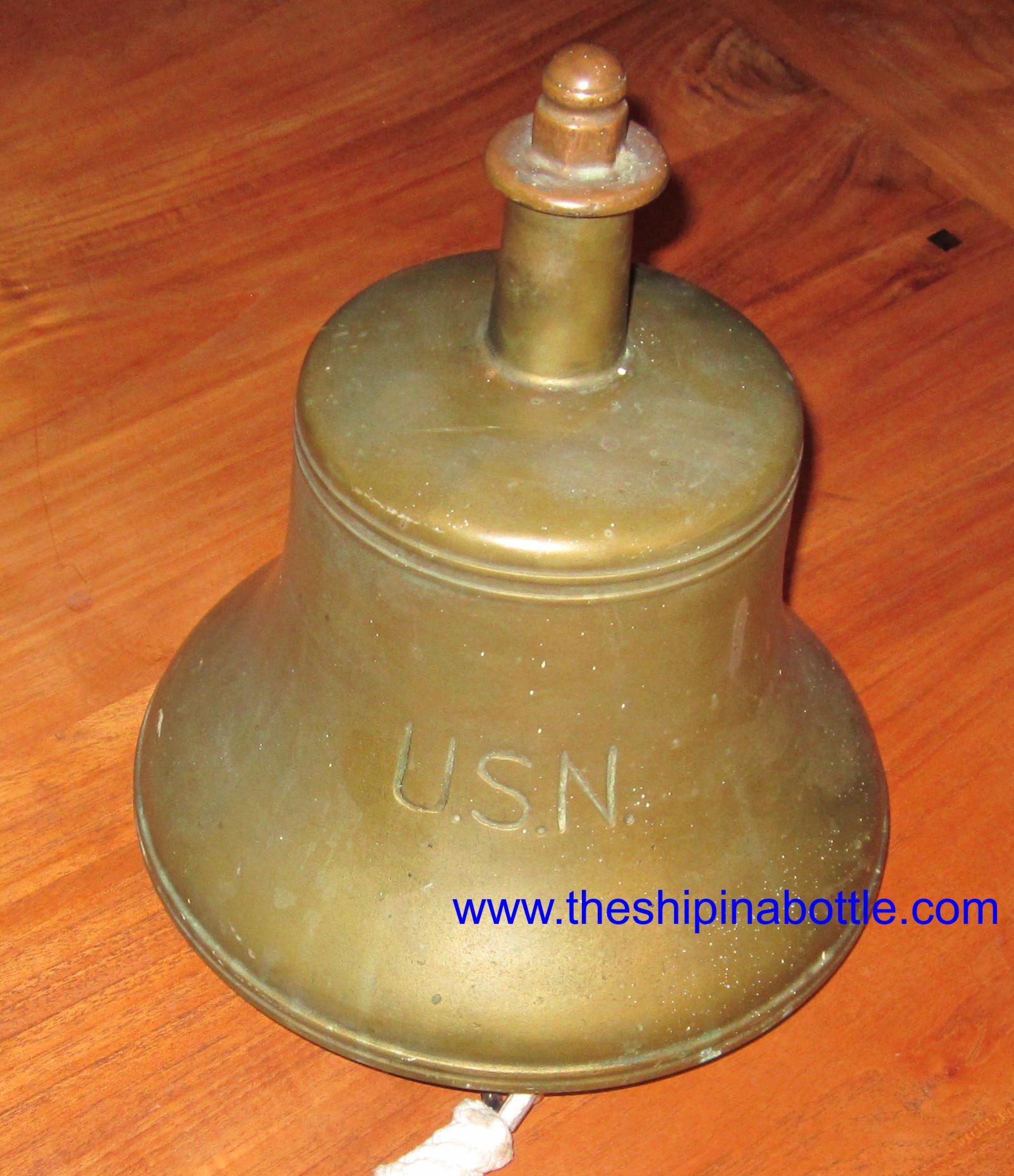 |
WW-I Era
Fore Deck Bell Vessel association unknown. SOLD |
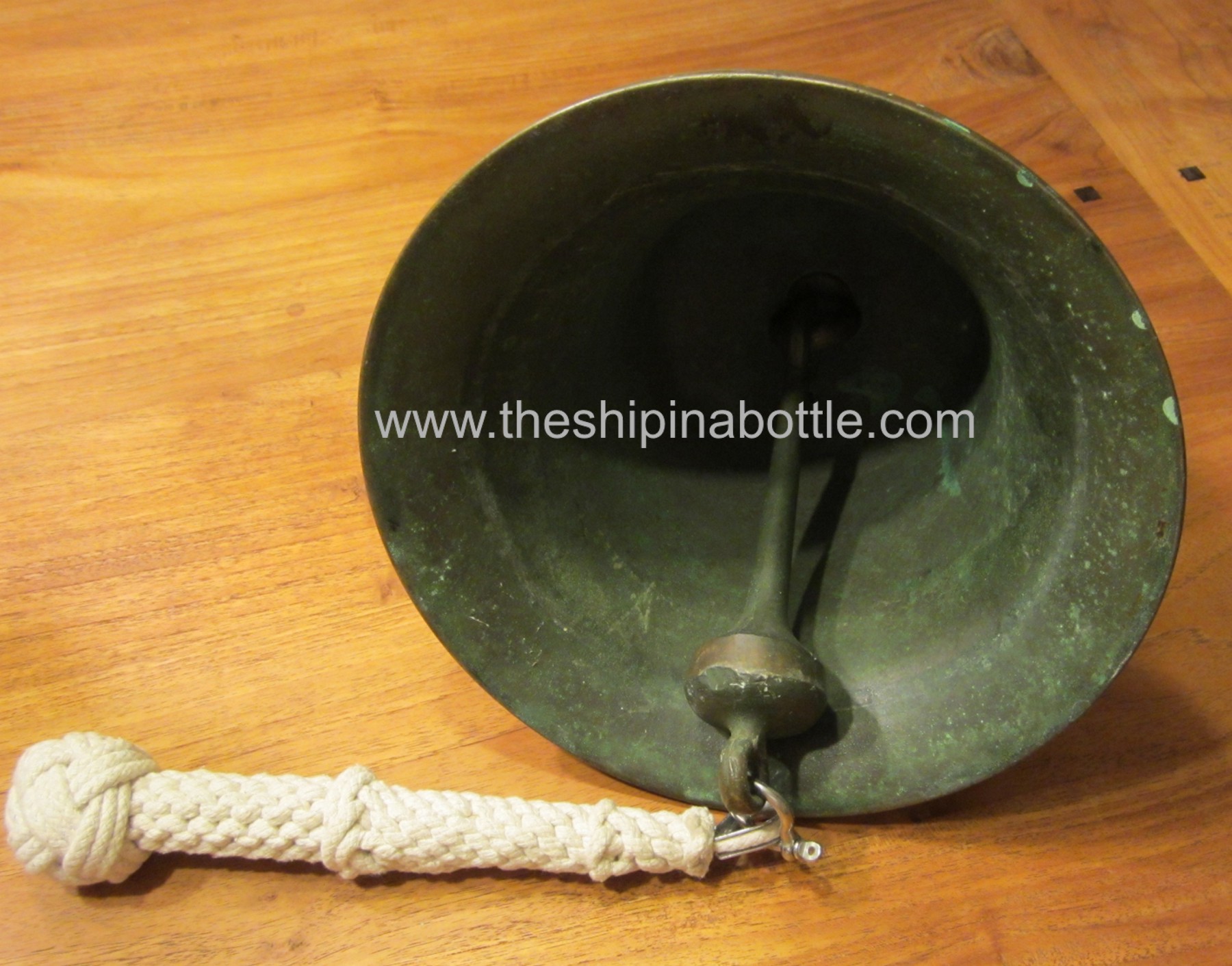 |
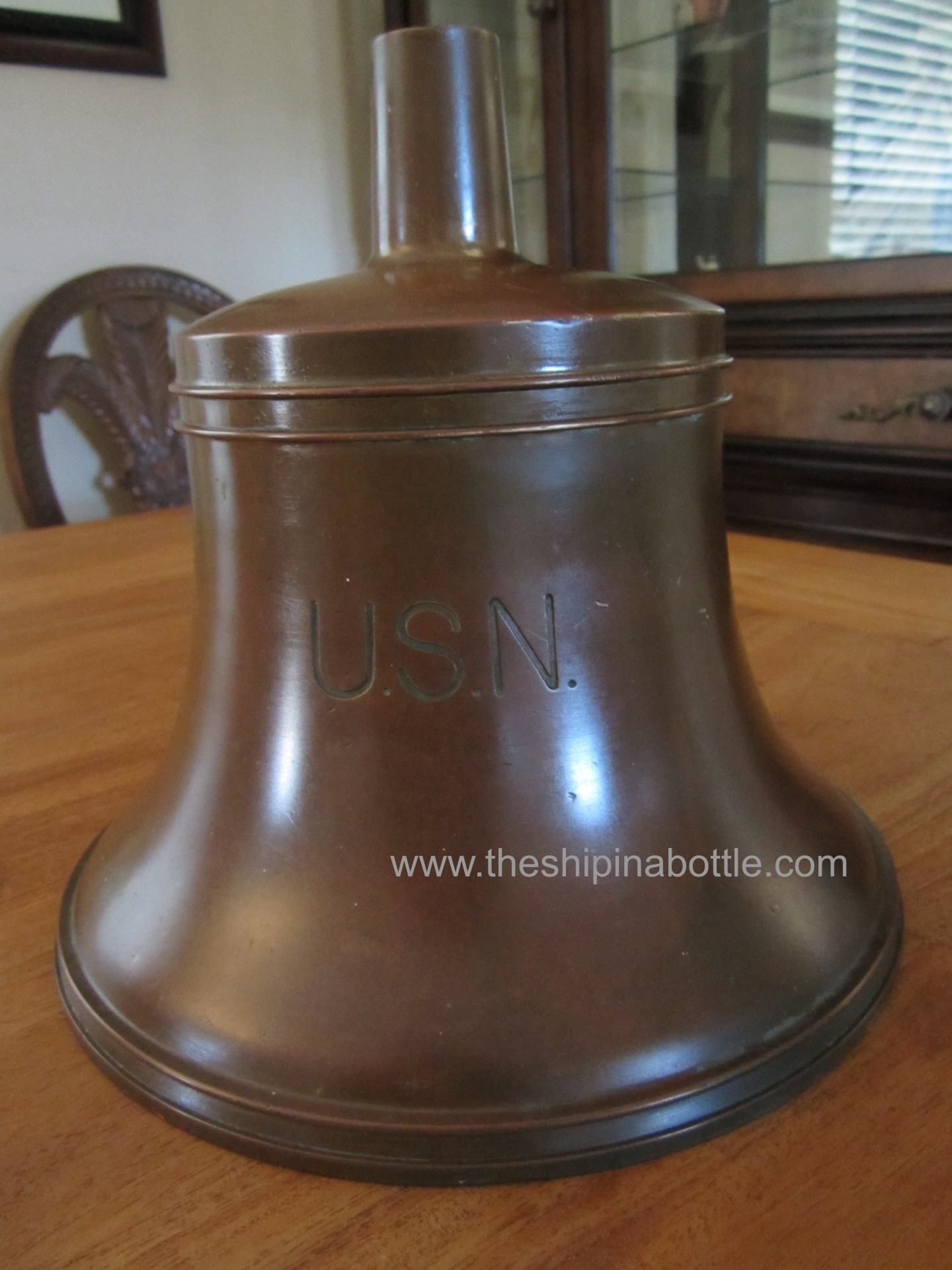 |
WW-II
Era Fore Deck Bell Vessel association unknown SOLD |
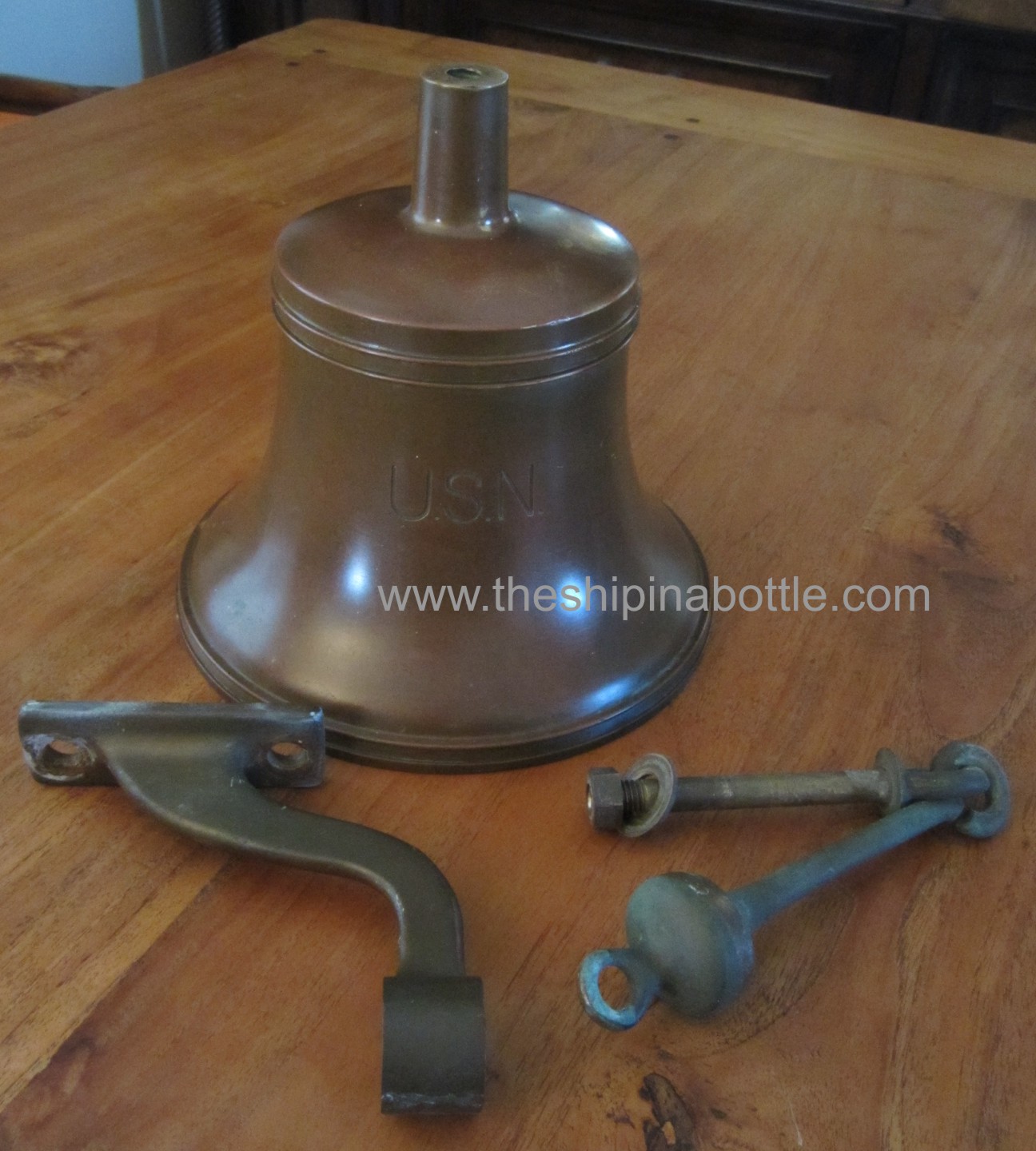 |
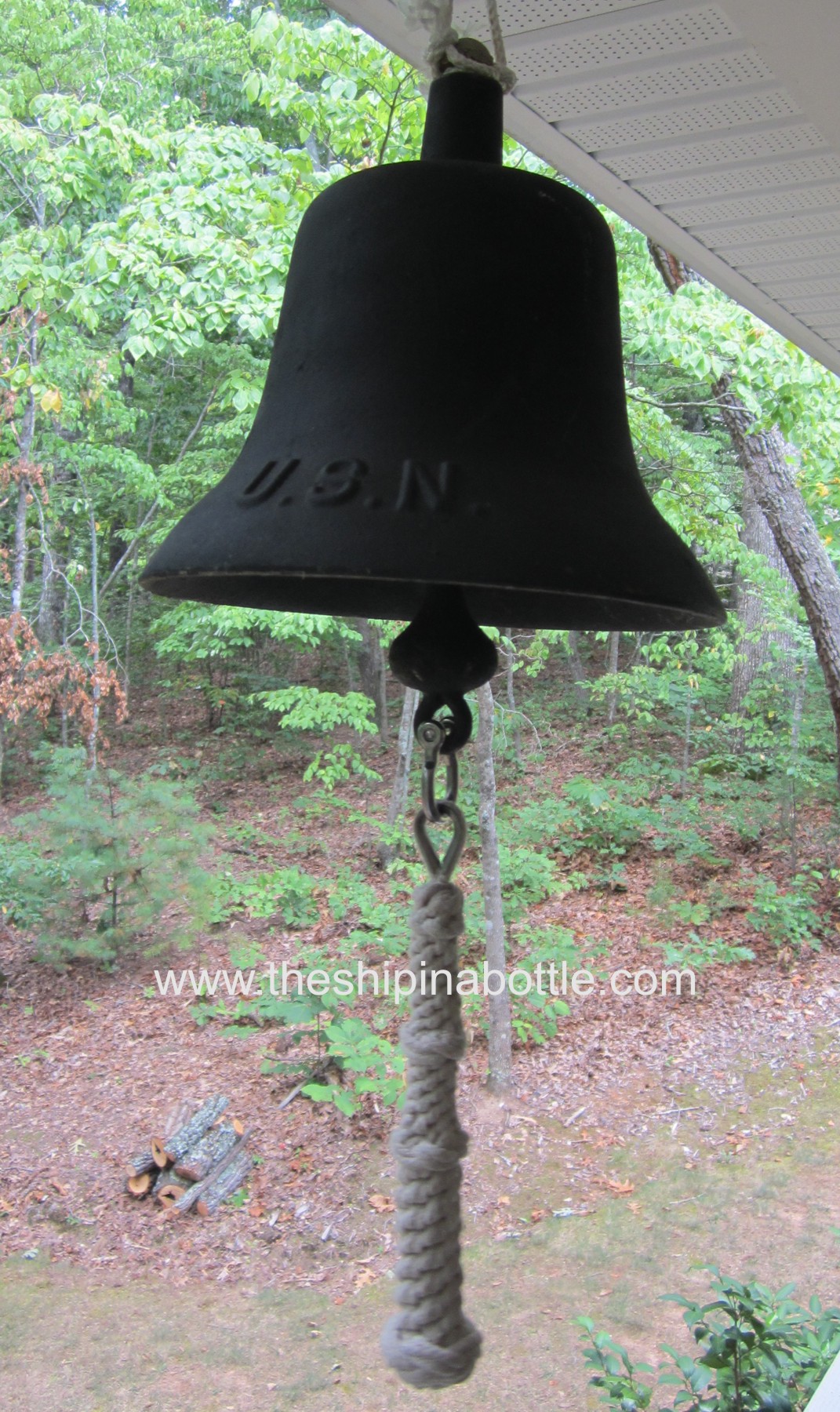 |
WW-II
Era Cast Iron US Navy Bell Harvard Lock Company SOLD |
 |
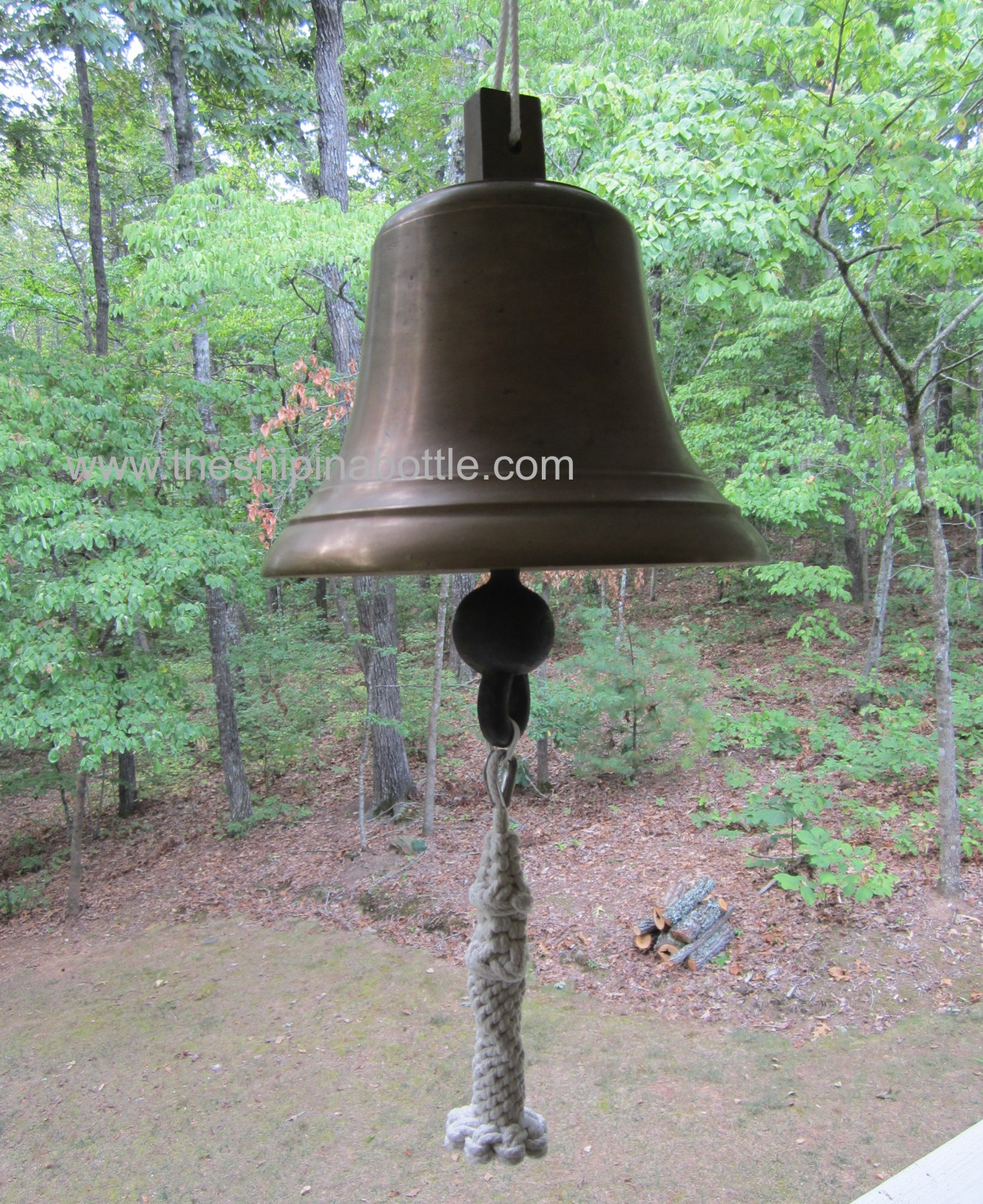 |
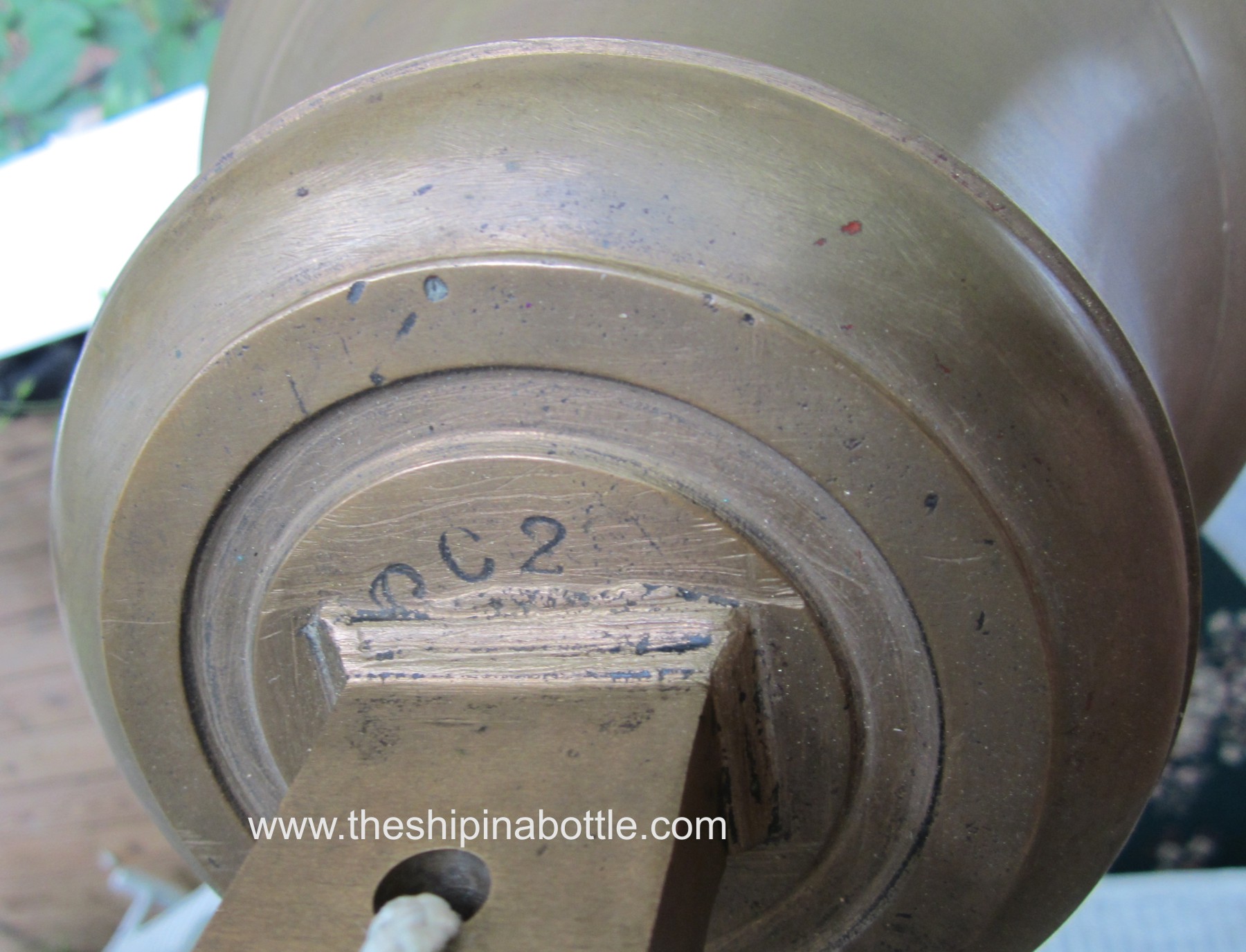
Cast
Brass Bell from Commercial Fishing Vessel British Isles SOLD |
 |
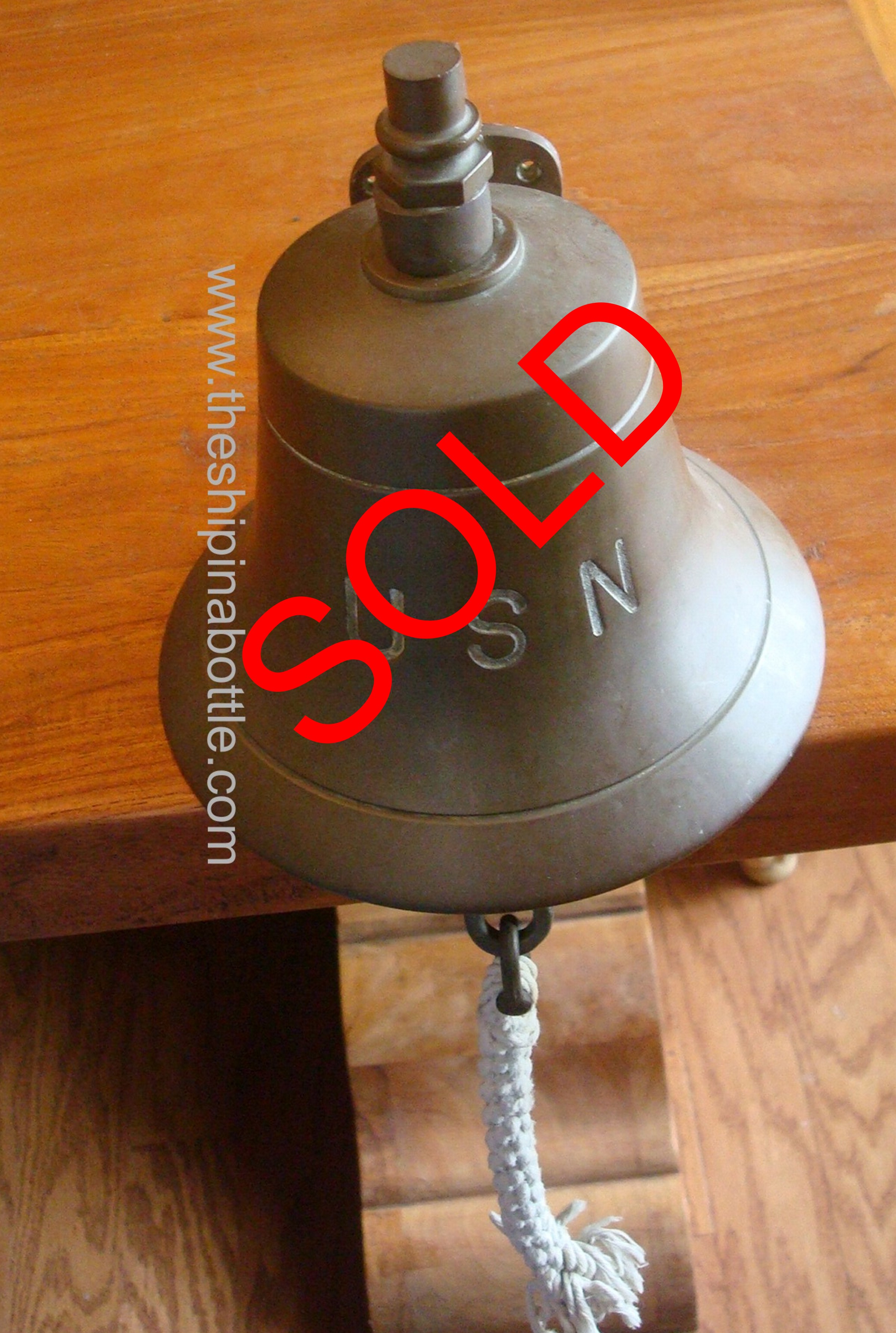 |
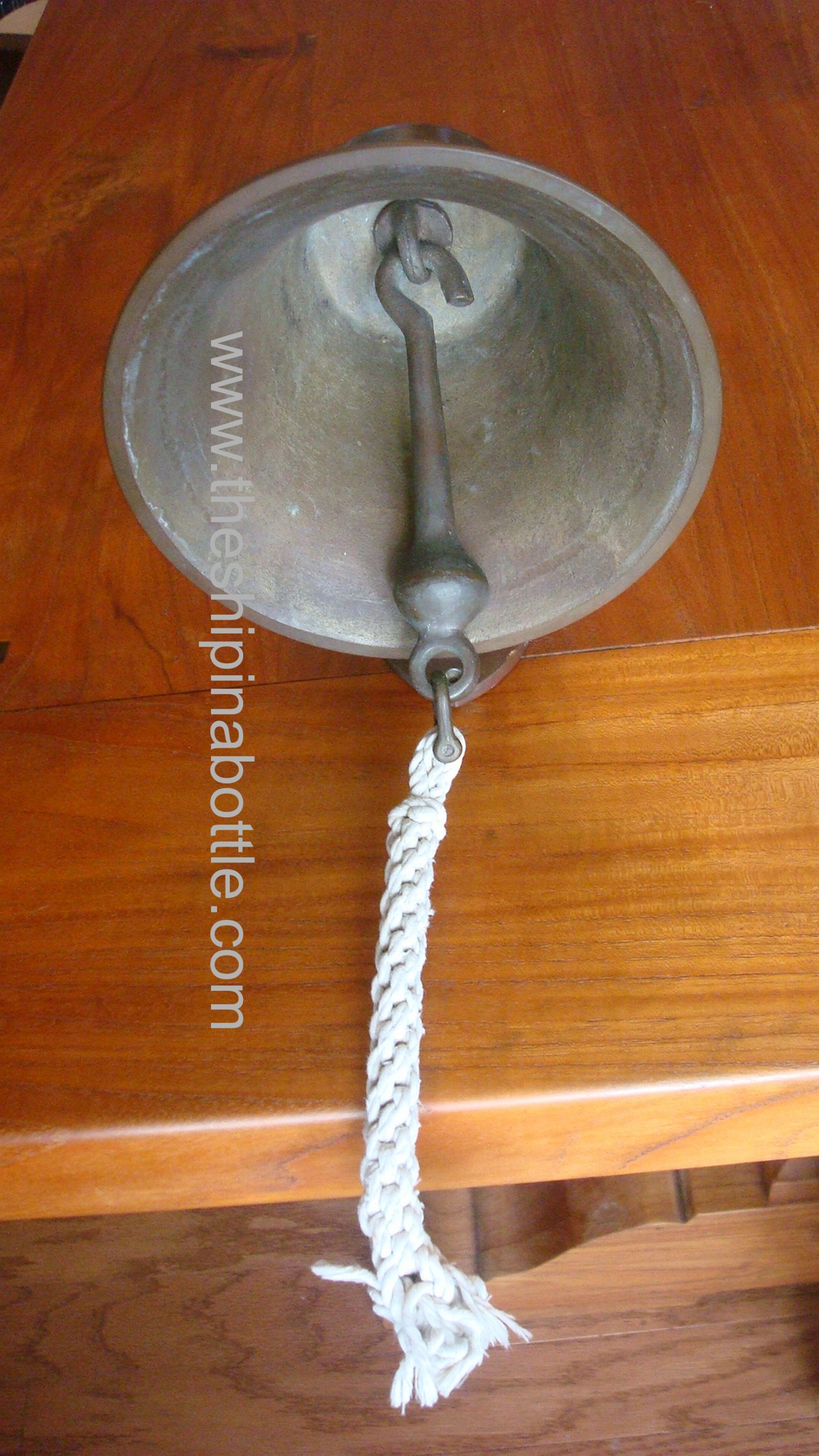
WWII Bell - USS Absacon (AVP-23), 1943-1949 SOLD |
 |
 |
Loeffler
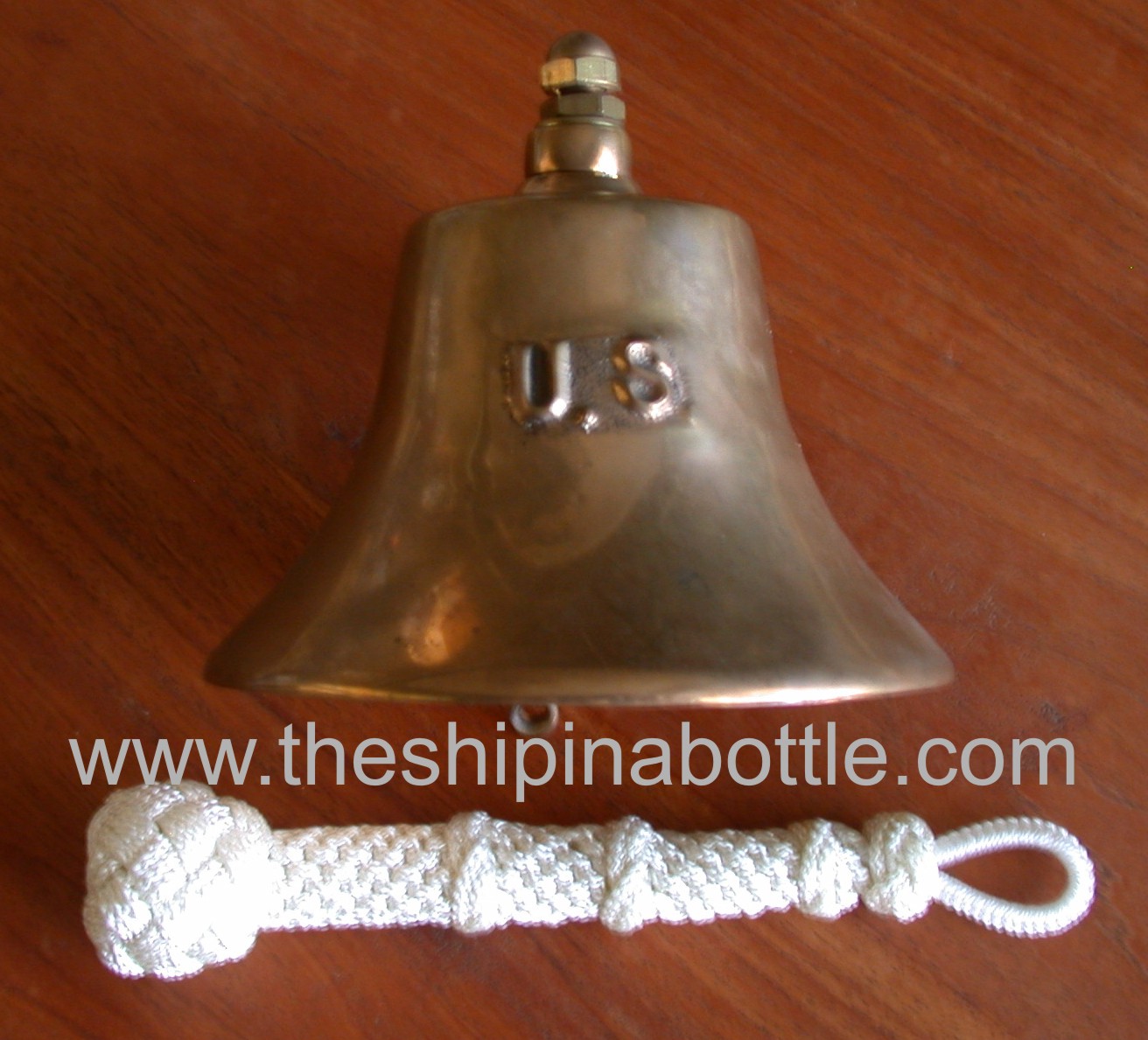
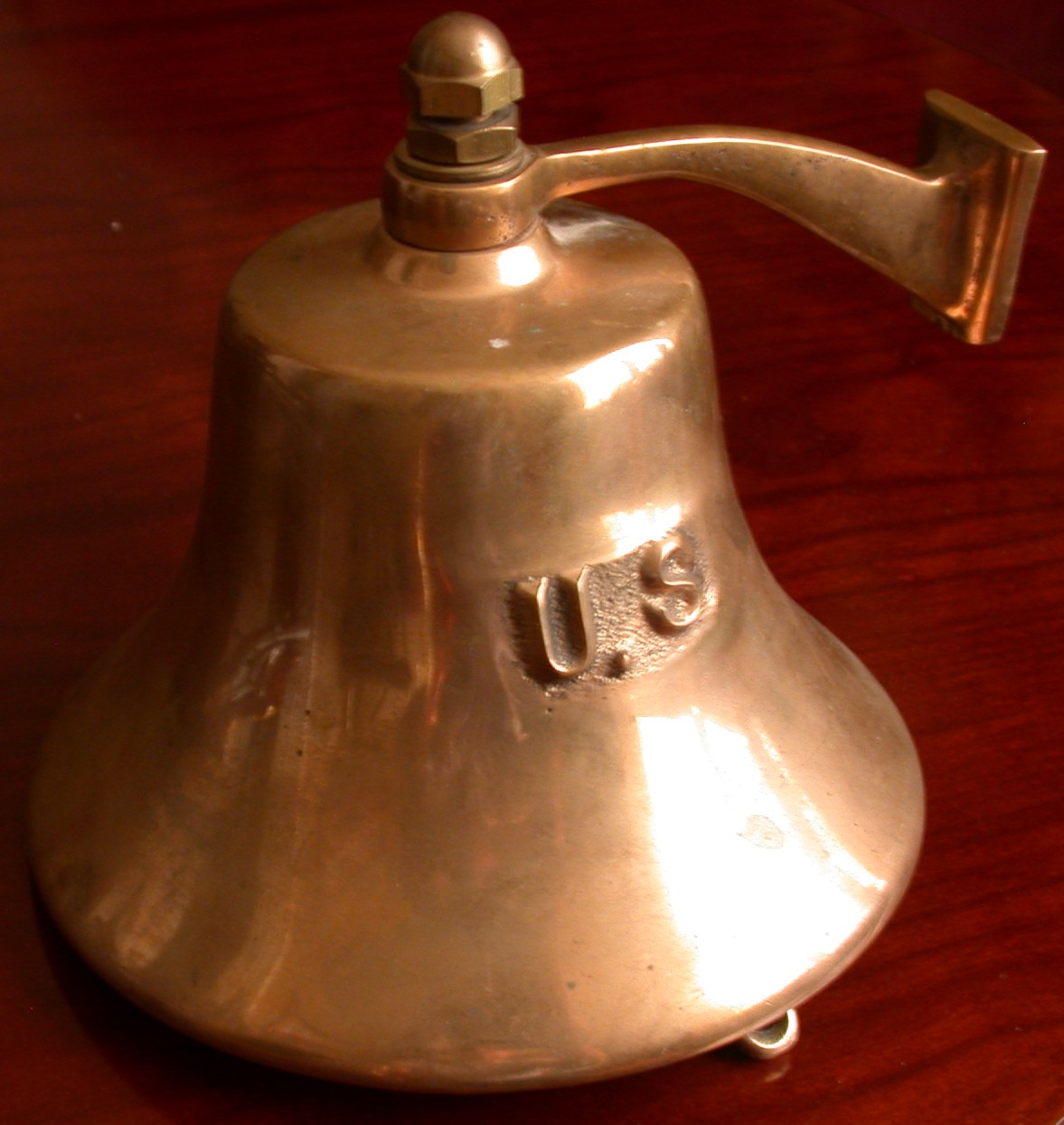
Bronze Ships Bell SOLD |
 |
Return Policy:
If you are not totally satisfied with your bell purchase you may return it for a full refund, if undamaged, within seven days of receipt. Returns must be in the original condition and packaging. All Returns must be insured for the full purchase value. Refunds for shipping and insurance paid on the initial purchase cannot be given and return shipping is at the cost of the buyer. Please contact us within (7) days by email first to obtain return authorization.Now this is a bell !!!
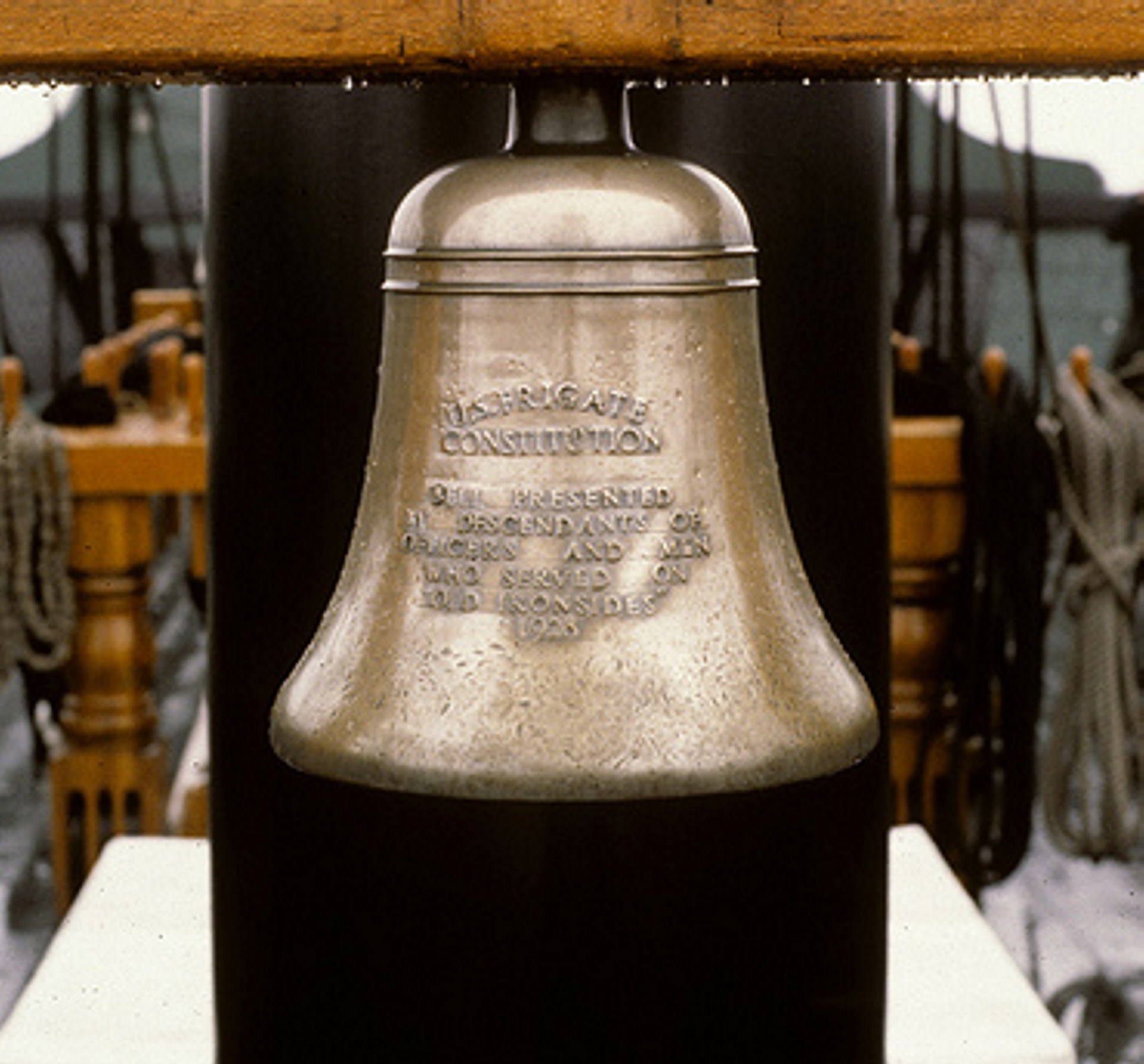
Ship's Bell - USS Constitution
The following information is the courtesy of:
DEPARTMENT
OF THE NAVY -- NAVAL HISTORICAL CENTER
805 KIDDER BREESE SE -- WASHINGTON
NAVY YARD
WASHINGTON DC
20374-5060
Disposition and continuing Navy use
In addition to its shipboard roles, the bell
serves a ceremonial and memorial function after the ship has served
its Navy career.
U.S. Navy bells are part of the many artifacts removed from
decommissioned vessels preserved by the
Naval
Historical
Center.
They may be provided on
loan
to new namesake ships; naval commands with an historical mission or
functional connection; and to museums and other institutions that
are interpreting specific historical themes and displays of naval
history. Bells remain the permanent
property of the US Government and the Department of the Navy.
These serve to inspire and to remind our
naval forces and personnel of their honor, courage, and commitment
to the defense of our nation.
Maintenance and upkeep
Traditionally, the bell is maintained by the
ship's cook, while the ship's whistle is maintained by the ship's
bugler.
In actual practice, the bell is maintained by a person of the ship's
division charged with the upkeep of that part of the ship where the
bell is located. In such a case a deck seaman or quartermaster
striker or signalman striker may have the bell-shining duty.
Bells in
religious ceremonies
The bell's connection to religious origins
continues. Originating in the British Royal Navy, it is a custom to
baptize a child under the ship's bell; sometimes the bell is used as
a christening bowl, filled with water for the ceremony. Once the
baptism is completed, the child's name may be inscribed inside the
bell. The bell remains with the ship
while in service and with the Department of the Navy after
decommissioning. In this way, an
invisible tie is created between the country, the ship and its
citizens.
Navy Ceremonies and Events
The bell is used to signal the presence of important persons. When the ship's captain, a flag officer, or other important person arrives or departs, watch standers make an announcement to the ship and ring the bell. This tradition extends to major naval command transitions, often held aboard vessels associated with the command.
Safety and
Communication
The sounding of a ship's bell found a
natural application as a warning signal to other vessels in poor
visibility and fog. In 1676 one Henry Teonage serving as a chaplain
in the British Mediterranean Fleet recorded , "so great a fog that
we were fain to ring our bells, beat drums, and fire muskets often
to keep us from falling foul one upon another". Ringing a ship's
bell in fog became customary. In 1858, British Naval Regulations
made it mandatory in that function. Today, maritime law requires all
ships to carry an efficient bell.
American ships of the Revolutionary War period and our early
national years adopted many of the practices and traditions of the
British Royal Navy, including the use of bells. In 1798, Paul Revere
cast a bell weighing 242 pounds for the frigate
Constitution,
also known today by its nickname "Old Ironsides".
It is of interest to note that the use of a ship's bell contributed
to the richest single prize captured by the American Navy during the
War of Independence. While a Continental Squadron under Commodore
Whipple lay-to, wrapped in
Timekeeping
Before the advent of the chronometer time at
sea was measured by the trickle of sand through a half - hour glass.
One of the ship's boys had the duty of watching the glass and
turning it when the sand had run out. When he turned the glass, he
struck the bell as a signal that he had performed this vital
function. From this ringing of the bell as the glass was turned
evolved the tradition of striking the bell once at the end of the
first half hour of a four hour watch, twice after the first hour,
etc., until eight bells marked the end of the four hour watch. The
process was repeated for the succeeding watches. This age-old
practice of sounding the bell on the hour and half hour has its
place in the nuclear and missile oriented United States Navy at the
dawn of the Twenty-First Century, regulating daily routine, just as
it did on our historic vessels under sail in the late Eighteenth
Century.